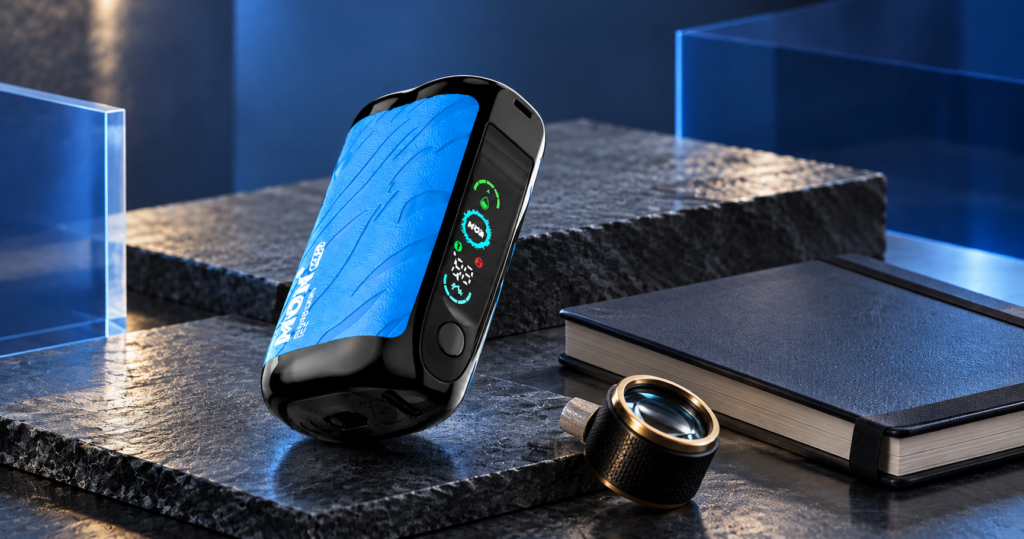




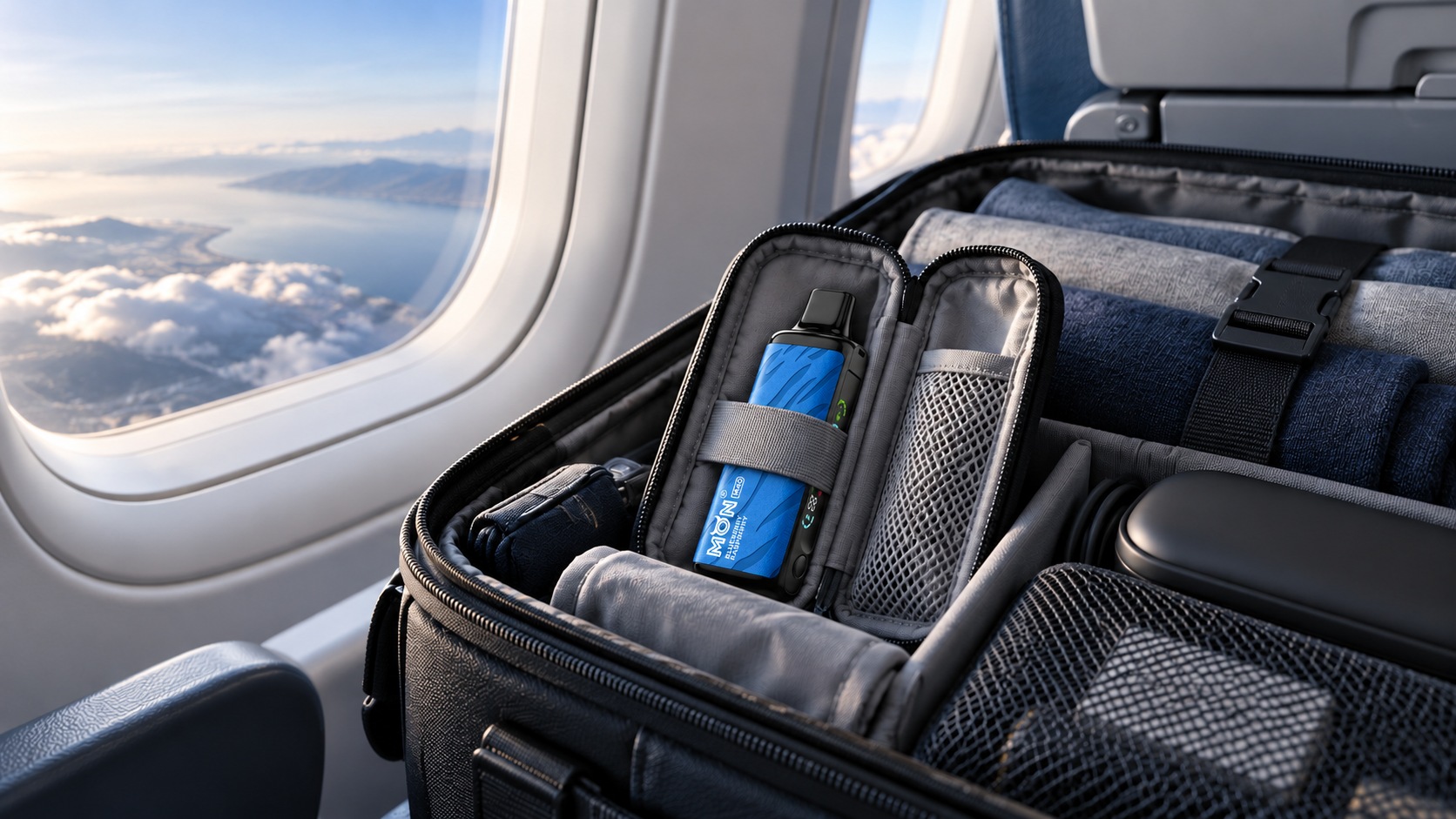
If your vape leaks after a flight, stop using and charging it until you have checked the mouthpiece, seams, airflow openings, charging port, and battery area. Temperature and cabin-pressure changes may contribute, but a loose pod, damaged seal, heat, or movement can also cause leakage.
A recent discussion on Planet of the Vapes described a user who experienced serious leaking after returning from a flight. Another participant suggested that pressure changes could contribute to liquid moving through the pod or seals. This is one community discussion, not proof that every vape will leak on an aircraft.
The important point is safety. A leaking vape should not simply be wiped off and used immediately. Liquid may have reached the charging port, buttons, airflow path, or battery area.
This guide explains possible causes, how to prepare before travelling, what to do after landing, and when to stop using the device completely.
If liquid appears during ordinary day-to-day use rather than after air travel, see our guide to why a vape may leak during everyday use for external checks and signs that mean you should stop using the device.
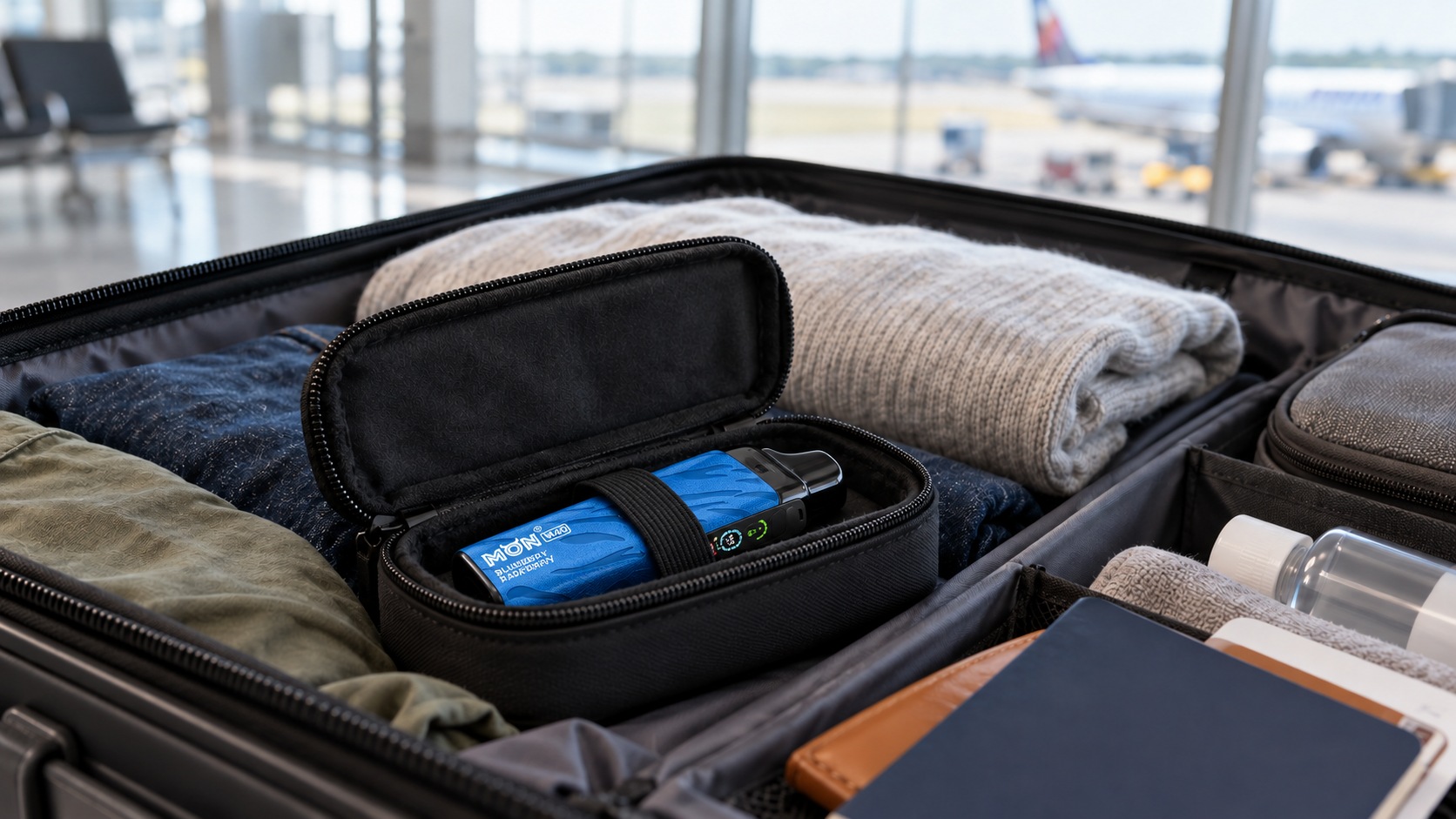
This information is for adults who already use nicotine products. If you do not use nicotine, do not start. This article is not for anyone under 21.
Temperature and pressure changes: why a vape may leak after a flight
A vape can contain e-liquid, air pockets, seals, a heating element, and a battery. During travel, several conditions can change at the same time:
- Cabin pressure changes
- Temperature changes
- Movement and vibration
- Position inside a bag
- Compression from clothing or other luggage
- A loose pod or damaged seal
- E-liquid becoming thinner in warm conditions
Pressure changes may contribute to leakage in some pod-style devices, but they are not the only possible cause. A device that leaks after a flight may already have had a weak seal, a damaged pod, a loose mouthpiece, or liquid around the connection point.
Do not assume that every leak is caused by the aircraft. Inspect the device carefully.
A community question is not a universal diagnosis
The Planet of the Vapes discussion involved a specific device and a specific travel experience. The user reported liquid underneath the pod after landing, while another forum member linked the issue to pressure changes and suggested separating the pod during transport.
That advice may be useful as a practical idea for some pod systems, but it should not be applied blindly to sealed or non-removable devices. Product construction varies. Some devices have removable pods, while others have an integrated tank and battery.
Always follow the instructions for your exact model and check the airline’s current rules before travelling.
Carry-on baggage and airline transport rules
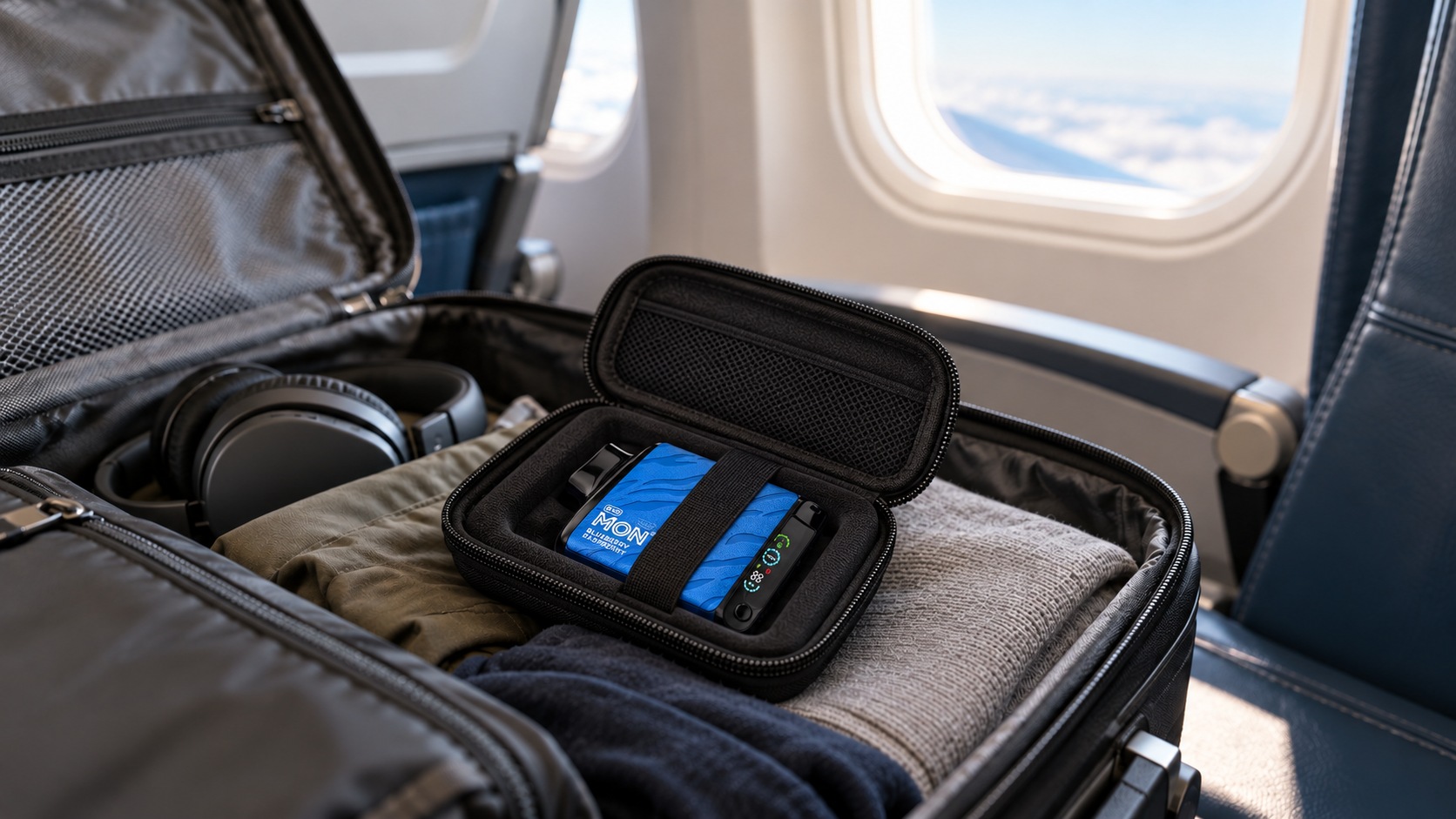
Airline and national rules can differ, so check the airline operating your flight and the departure, transit, and arrival country.
European Union aviation guidance states that e-cigarettes must be carried in hand baggage rather than checked baggage. EASA also notes that e-cigarettes should not be recharged on board.
The FAA similarly says electronic cigarettes and vaping devices must be carried on the person or in carry-on baggage, protected against damage and accidental activation. The FAA also advises passengers to follow airline-specific limits.
A practical travel checklist is:
- Keep the device in carry-on baggage.
- Do not put it in checked luggage.
- Protect it from accidental activation.
- Keep it away from keys, coins, and other metal objects.
- Do not use it during the flight.
- Do not charge it on board.
- Check the airline’s current restrictions before departure.
- Do not travel with a damaged, swollen, recalled, or overheating battery.
Rules can change, and some airlines or countries may apply stricter restrictions.
How to prepare a vape before travelling
Preparation can reduce the chance of leakage and accidental activation.
Check the device before leaving
Inspect the mouthpiece, pod connection, charging port, buttons, and outer casing. Look for:
- Existing liquid around the base
- Cracks or dents
- A loose pod
- A damaged mouthpiece
- A blocked airflow opening
- Unusual warmth
- A battery that drains unusually quickly
Do not travel with a device that is already leaking or damaged. A damaged lithium battery can create a serious fire risk.
Keep the device protected
Use a small protective pouch or case that keeps the vape separate from loose metal objects. Do not place it unprotected in a pocket or a bag containing keys, chargers, coins, or tools.
The case should prevent the device from being crushed and should reduce the chance of accidental activation.
Keep it accessible
Do not bury the device at the bottom of checked luggage or a tightly packed suitcase. Carry-on storage keeps it accessible if airport staff or cabin crew need to inspect it.
If your carry-on bag is taken at the gate and placed in the aircraft hold, follow the airline’s instructions. E-cigarettes and spare batteries should remain with you in the cabin whenever required by the airline or aviation rules.
Should a removable pod be separated?
For a device with a removable pod, separating the pod from the battery section may reduce the chance of liquid reaching the battery connection during transport. Some experienced users also place the pod in a small sealed bag with absorbent material.
However, this advice does not apply to every device. Do not dismantle a sealed disposable or integrated device. Do not remove internal batteries. Do not puncture, open, or modify the device.
If the manufacturer does not describe a component as removable, treat it as non-removable.
Safe checks after landing
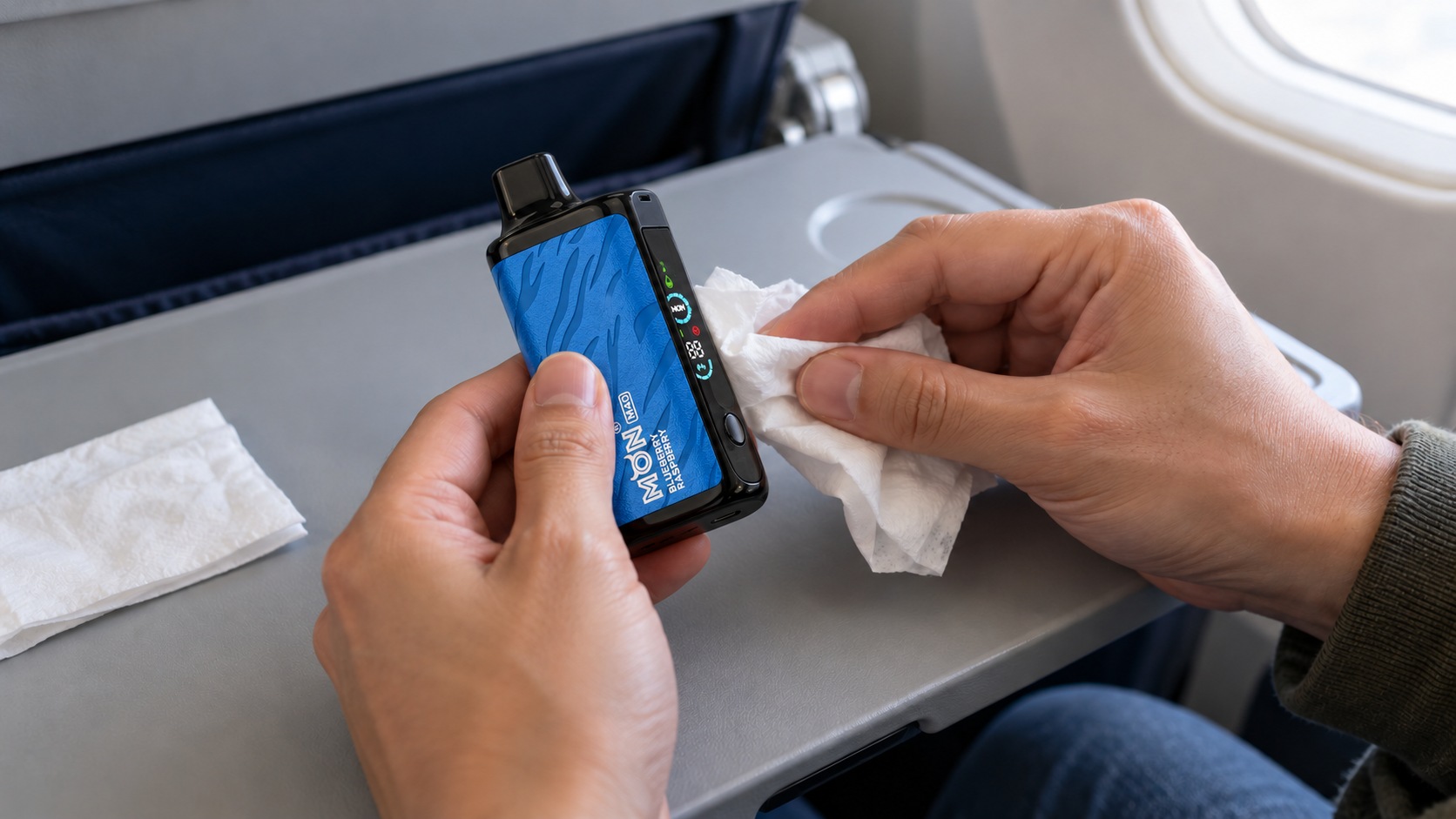
Before using the device, inspect it carefully.
- Keep it switched off or inactive.
- Move it away from passports, phones, chargers, and other personal items.
- Place it on a stable surface.
- Wipe external liquid with a dry disposable tissue.
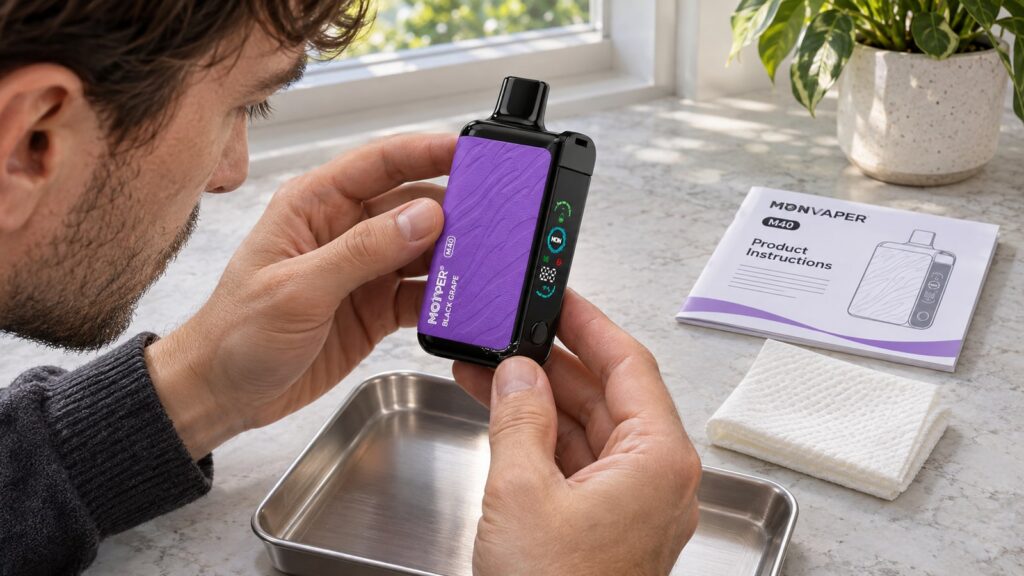
- Check the mouthpiece, seams, charging port, and airflow openings.
- Look for signs that liquid has entered the battery or electronics area.
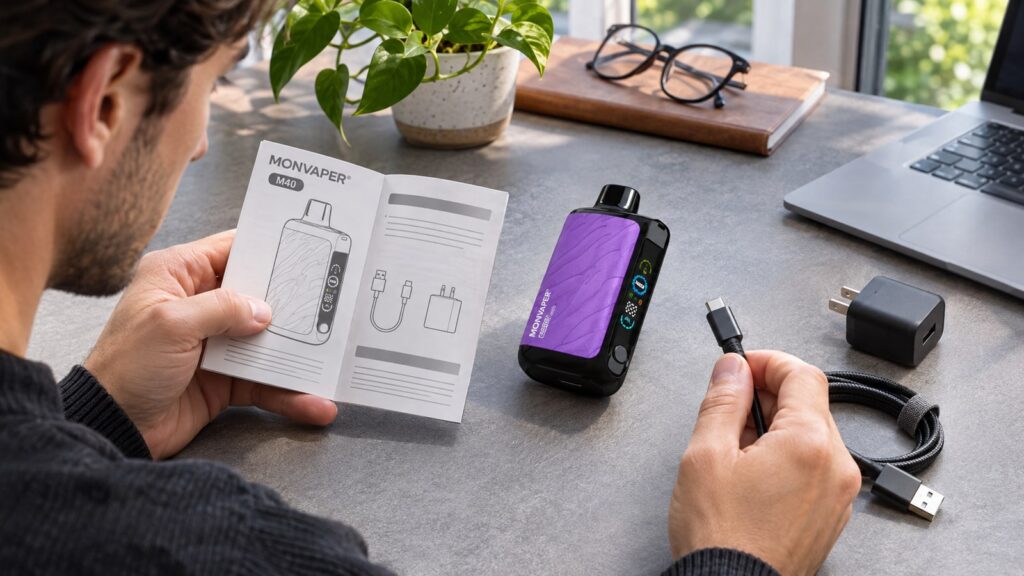
- Do not connect it to a charger.
- Do not take a test puff if the device is wet, hot, damaged, or producing an unusual smell.
If liquid has entered the charging port or the inside of the device, do not attempt to dry it with a hair dryer, heater, or open flame. Do not shake it aggressively. Contact the seller or manufacturer for model-specific instructions.
When should you stop using a leaking vape?
Stop using the device if you notice:
- Persistent leaking after cleaning the outside
- Liquid inside the charging port
- Unusual heat
- Swelling or deformation
- A chemical or burnt smell
- A metallic or harsh taste
- Automatic activation
- Flickering or abnormal display behaviour
- A damaged casing
- Smoke, hissing, or crackling when not in use
Do not keep charging or testing a device with these symptoms. Move it away from flammable items and follow local instructions for damaged battery disposal.
If e-liquid contacts skin, wash the area with soap and water. If it enters the eyes, rinse with clean water and seek medical advice if irritation continues. Keep nicotine liquid away from children and pets.
Can heat make a leak worse?
Temperature can affect e-liquid thickness and the pressure inside a sealed system. A device left in a hot vehicle, near a heater, or in direct sun may behave differently from one kept at room temperature.
Do not store a vape in a parked car. Avoid extreme cold and heat. Allow a device to return to normal room temperature before checking it, but do not use it if it has already leaked into the electronics or shows damage.
Weather and temperature are possible contributing factors, not a guaranteed explanation for every leak.
What if the device still works after leaking?
A device may still activate after liquid appears around it, but that does not prove that it is safe. Liquid can affect internal electrical contacts without causing an immediate failure.
Do not use “it still works” as the safety test. If liquid has reached the charging area, battery section, or internal electronics, stop using the device and ask the seller or manufacturer for advice.
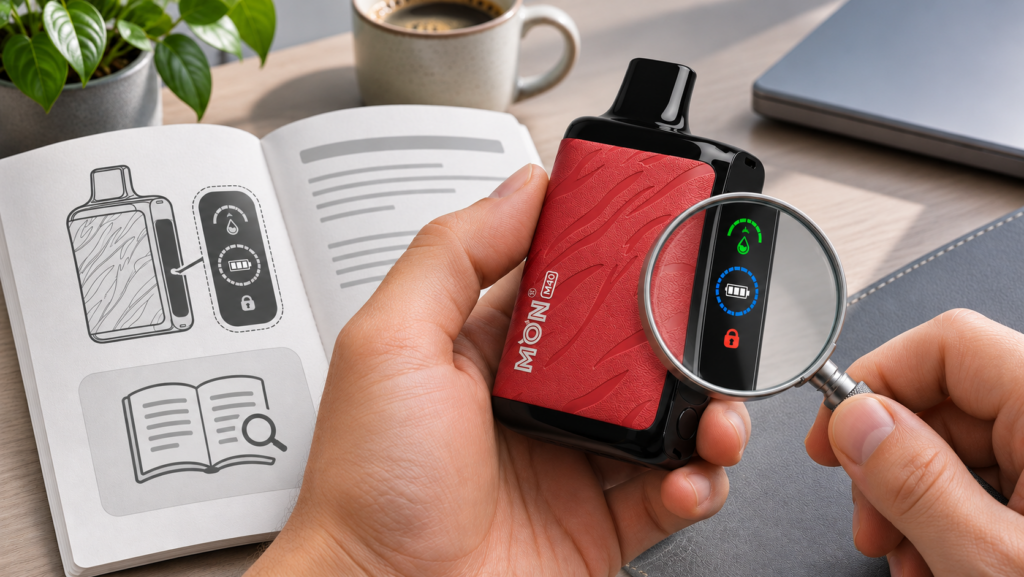
For general adult-user guidance on rechargeable vape handling and controls, you can also review the MONVAPER M40 user guide. The guide applies to the M40 model only, so do not assume every instruction applies to another device.
How to reduce the chance of future leakage
Before your next trip:
- Check the device for existing leaks.
- Use a protective case.
- Keep it in carry-on baggage.
- Avoid leaving it in direct heat.
- Separate removable components only if the manufacturer allows it.
- Keep the device away from metal objects.
- Do not charge it during the flight.
- Review airline and destination-country rules.
- Do not travel with a damaged battery or damaged device.
There is no method that guarantees a pod or sealed device will never leak during air travel. The safest plan is to reduce exposure to heat, pressure, impact, and accidental activation, and to stop using any device that becomes abnormal.
Frequently Asked Questions
Vape leaking after flight: what could cause it?
Possible factors include pressure changes, temperature, movement, compression, a loose pod, or a damaged seal. A single forum report cannot establish one universal cause.
Can I put my vape in checked baggage?
Many aviation authorities require e-cigarettes and vaping devices to be carried in the cabin or in carry-on baggage. Check the current rules of your airline and all countries on your route. Do not assume checked baggage is allowed.
Can I use my vape on a plane?
No. Follow the airline’s instructions and aviation rules. Electronic cigarettes should not be used during a flight.
Can I charge my vape on the plane?
EASA guidance says e-cigarettes must not be recharged on board. Check the airline’s rules and keep the device switched off and protected.
Should I separate a pod before flying?
Only if the pod is designed to be removed and the manufacturer’s instructions allow it. Do not open or dismantle a sealed vape.
What should I do if liquid gets into the charging port?
Do not charge the device. Do not use heat to dry it. Keep it away from flammable items and contact the seller or manufacturer.
Can I use a leaking vape after wiping it?
Not automatically. If the device is hot, damaged, wet inside, smells unusual, tastes abnormal, or continues leaking, stop using it.
Are the rules the same in every country?
No. Airlines, airports, transit countries, and destination countries may have different requirements. Check official sources before travelling.
Final safety reminder
A vape that leaks after a flight may have been affected by pressure, temperature, movement, or a pre-existing seal problem. Treat leakage as a reason to inspect the device carefully, not as something to ignore.
Keep electronic smoking devices in carry-on baggage, protect them from accidental activation, do not use or charge them on the aircraft, and do not travel with damaged or overheating batteries.
21+ only. This product contains nicotine. Nicotine is an addictive substance. Keep all nicotine products out of the reach of children and pets.