




Last updated: 18 November 2026. Laws across the EU change quickly — this guide reflects the rules in force at the time of writing.
Type “are disposable vapes banned in Germany” into Google and you will get a wall of conflicting answers. One site says they were banned in 2025. Another insists nothing has changed. A third quotes a date in 2027. So what is actually true for vapers in Germany right now?
The short answer: as of November 2026, no, disposable vapes are not banned in Germany. You can still buy, own and use them legally. But three separate rules are converging that will change the market in the next 12–18 months — and if you are stocking up or planning what to vape in 2027, you need to understand the difference between them.
Is vaping legal in Germany in 2026?
Yes. Nicotine vaping products are legal in Germany within the standard EU limits set by the Tobacco Products Directive (TPD): tanks and prefilled pods capped at 2 ml, e-liquid bottles at 10 ml, and nicotine strength at 20 mg/ml. You must be at least 18 to buy vape products, and advertising to minors is prohibited. Public vaping rules vary by state and venue, but there is no general nationwide ban on using e-cigarettes.
The confusion comes from the word “ban”, which is being used loosely for three completely different things: a retail sales ban, a battery design rule, and a take-back obligation. Only one of those is a real ban, and it has not happened in Germany yet. Let’s separate them.
Disposable vape ban Germany: what is actually in force
Germany has no federal law prohibiting the sale of disposable e-cigarettes. Buying one is legal; selling one is legal. This puts Germany in a minority position in Western Europe, where several neighbours have already acted:
| Country | Disposable vape status |
|---|---|
| United Kingdom | Sales banned since 1 June 2025 |
| Belgium | Sales banned since 1 January 2025 |
| France | Sales banned since 26 February 2025 |
| Ireland | Law signed July 2026; sales ban from 24 January 2027 |
| Bulgaria, Austria, Poland, Spain | Approved or in legislative process |
| Netherlands, Denmark | No hardware ban, but tobacco-flavour only |
| Germany | No sales ban; retailer take-back mandatory since 1 July 2026 |
Germany’s federal government did announce an intention to ban disposables — the environment ministry has signalled support, and a draft is in progress — but no bill has been published and no sales ban is in force. Headlines that say “Germany bans disposable vapes” are reporting a political direction, not current law.
Why disposables will effectively disappear in February 2027 anyway
This is the part most articles miss. Even without a German sales ban, the classic disposable vape is on borrowed time across the entire EU because of the EU Battery Regulation (Regulation (EU) 2023/1542).
Article 11 of the regulation requires that the batteries in consumer devices “can be readily removed and replaced by the end-user at any time during the lifetime of the product.” Article 96 sets the application date: 18 February 2027.
A classic disposable vape has a lithium cell permanently sealed and soldered inside the chassis. It cannot be removed without destroying the device, so it fails Article 11. From that date, such a device may no longer be placed on the EU market — in Germany as in every other member state. Importantly, the rule targets the throwaway battery, not vaping itself. A device with an openable battery compartment, or a rechargeable and refillable system, remains compliant.
This is why the phrase “the EU disposable ban” is a useful shortcut but not technically accurate. It is an e-waste and battery-design rule, and it applies to all 27 member states at once.
The take-back rule that already affects you
Since 1 July 2026, an amendment to the German Electrical and Electronic Equipment Act (ElektroG) has required every point of sale that offers e-cigarettes or heated tobacco to take back used devices free of charge. This applies to kiosks, petrol stations and online shops alike, regardless of business size.
That is not a sales ban — it is a disposal rule. If you want the practical step-by-step on preparing a device for recycling and where to drop it off, see our dedicated guide: Where to Dispose of Vape Batteries in 2026: A Safe Recycling Guide for Germany & the EU.
Germany vape tax 2027: what changes on 1 January
Throwing devices away is not the only thing getting more expensive. On 15 October 2026 the Bundestag passed an amendment to the Tobacco Tax Act (the Bundesrat followed on 16 October, and it was promulgated in the Federal Law Gazette on 20 October). Germany taxes e-liquid by volume, not by nicotine content — so a 0 mg shortfill and a 20 mg nic salt pay the same per millilitre, and prefilled pods and disposables are taxed on the liquid inside them.
| Year | Excise per ml | Tax on a 10 ml bottle |
|---|---|---|
| 2026 (current) | €0.32 | €3.20 |
| 2027 | €0.38 | €3.80 |
| 2028 | €0.40 | €4.00 |
| 2029 | €0.42 | €4.20 |
| 2030 | €0.44 | €4.40 |
The first increase lands on 1 January 2027 — a 6-cent jump, and a cumulative 37.5% rise by 2030. Germany already has the highest e-liquid tax in the EU, which is part of why the legal market is closely watched and smuggling is a live political concern. For consumers, the practical takeaway is simple: anything you buy for a 2027 shelf date should be budgeted at the €0.38/ml rate, plus 19% VAT.
What this means for your next device
Put the three rules together and the direction is clear: sealed, single-use devices are being squeezed from every side — environmentally (take-back), legally (battery design), and economically (tax). Rechargeable, higher-capacity devices that you keep and reuse are the opposite: they sidestep the battery rule, produce far less waste, and spread the per-millilitre tax over a much longer life.
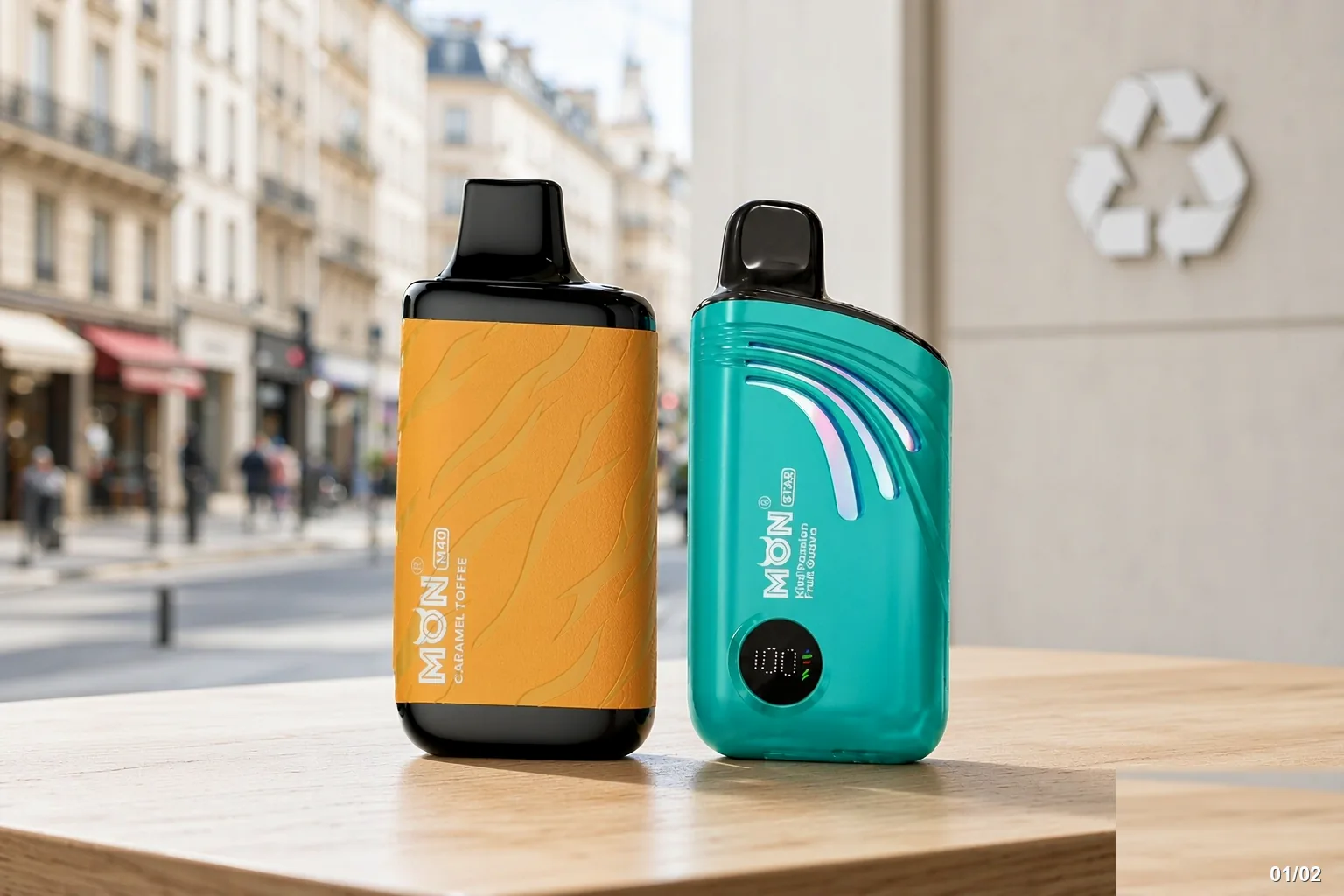
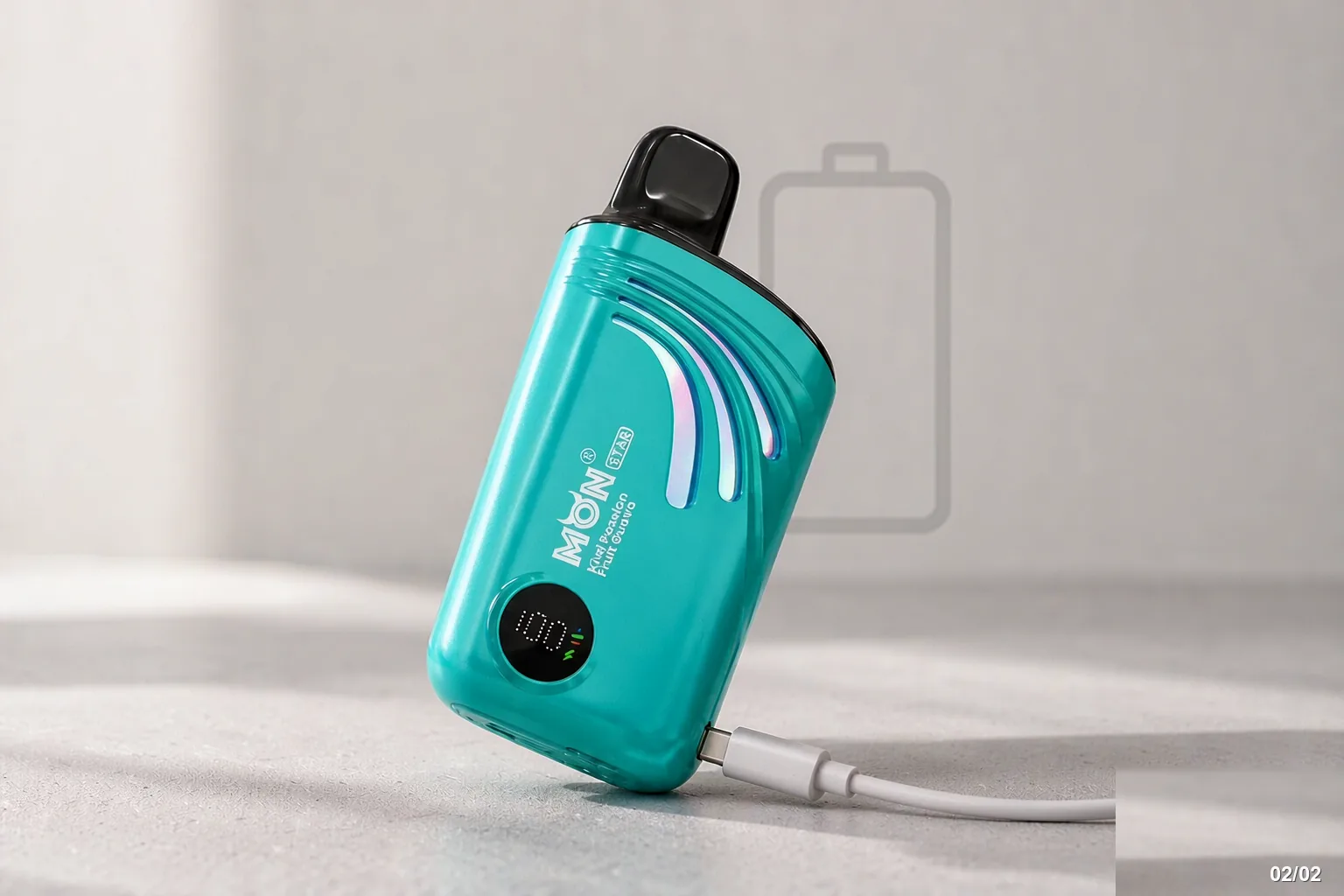
This is exactly the gap our MON M40 and MON STAR 50K are built for. Both are rechargeable high-puff devices — the M40 with its black body and textured leather-style panel, the STAR 50K with its teal finish, three-arc front and small digital display — designed to be kept and recharged rather than thrown away after a few hundred puffs. If you currently burn through single-use devices, switching to a rechargeable device is the single most future-proof move you can make before 2027.
Frequently asked questions
Are disposable vapes banned in Germany right now?
No. As of November 2026 there is no federal sales ban on disposable e-cigarettes in Germany. Buying, owning and using them is legal for adults. A national ban has been announced politically but no bill has been published.
What happens on 18 February 2027?
The EU Battery Regulation’s requirement for removable, replaceable batteries takes effect. Disposables with a sealed, non-removable battery can no longer be placed on the EU market. It is a battery-design rule, not a ban on vaping.
Can I still bring vapes into Germany from abroad?
Personal-use quantities are generally allowed, but products must comply with TPD limits (2 ml pods, 20 mg/ml nicotine) and you must be 18 or over. Check current customs guidance before travelling, and carry devices in hand luggage because of lithium battery fire risk.
Will all vape flavours be banned in Germany?
No. Germany is currently the outlier in Western Europe in still allowing all flavour categories, including fruit and dessert profiles. Restrictions are being discussed politically, but nothing has been decided. Other countries such as the Netherlands and Denmark already restrict sales to tobacco flavour only.
Is vaping cheaper than smoking in Germany in 2027?
Generally yes, though the gap narrows as e-liquid tax rises. From 1 January 2027 the duty is €0.38 per ml (up from €0.32), applied to bottles, prefilled pods and the liquid inside disposables alike. Rechargeable, refillable devices remain the most cost-effective option over time.
The bottom line
Disposable vapes are not banned in Germany today — but between the July 2026 take-back obligation, the February 2027 EU battery rule and the January 2027 tax increase, the era of the sealed single-use device is ending. If you vape in Germany, the smart move is to move to a rechargeable device now, recycle your old ones properly, and keep an eye on the final text of any national ban as it develops.
This article is intended for adults of legal vaping age (21+) and is general information, not legal advice. Always check the current official rules before purchasing or travelling.