



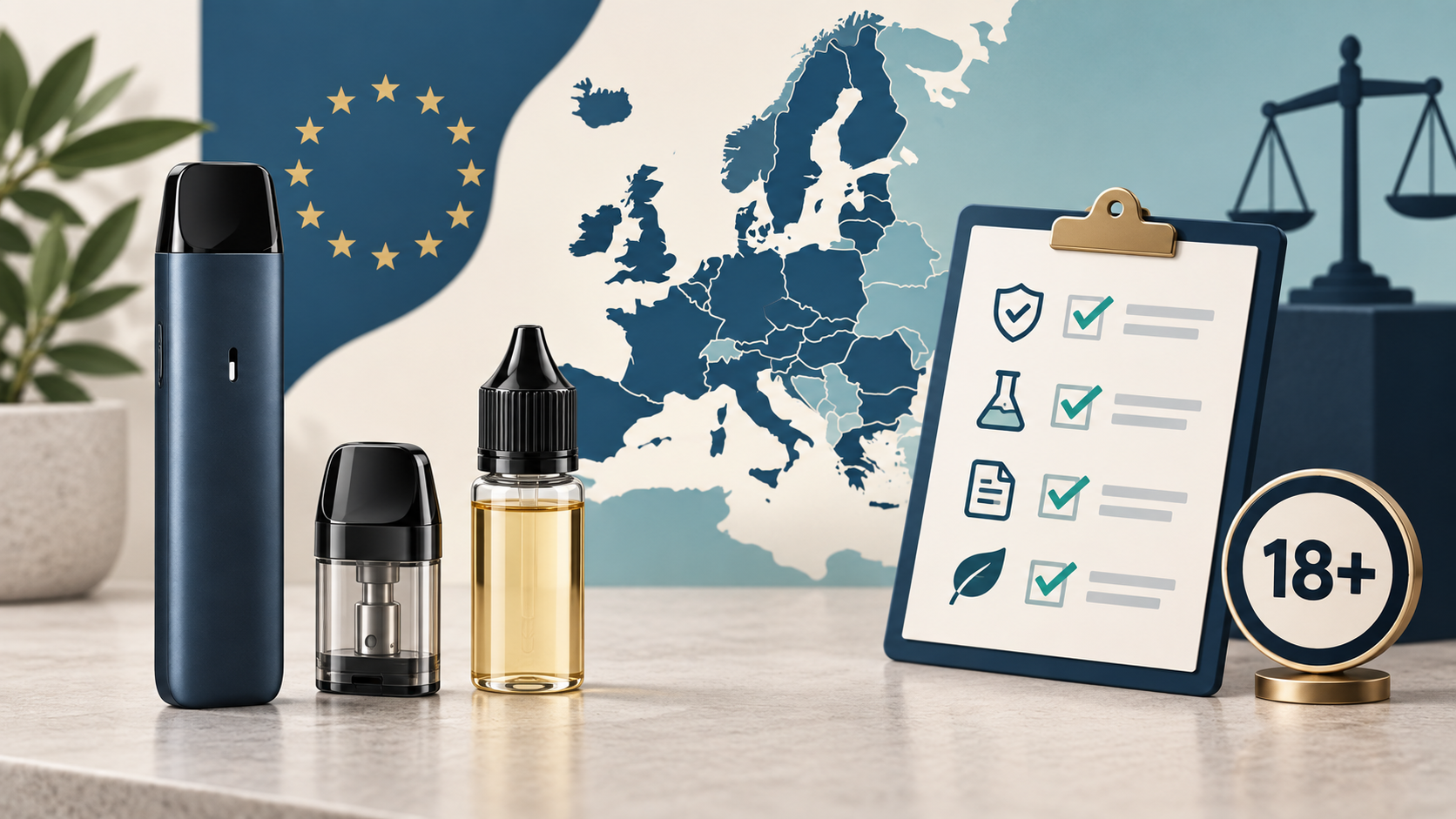
For legal-age adults only. This neutral guide explains common e-cigarette format terms that adults may encounter when searching for vape laws Europe, disposable vape ban Europe, reusable vape and refillable pod. It is not medical or legal advice, does not recommend any product, and does not apply to minors. Nicotine is addictive; people who do not use nicotine should not start.
Why European vape rules matter in 2026
Europe is not one single vaping market. The EU Tobacco Products Directive (TPD) establishes a framework for consumer e-cigarettes sold in EU countries, including notification, quality, packaging and safety requirements. But individual countries can add local restrictions. The United Kingdom also has its own rules. For adults, the useful starting point is not a trend claim: it is checking the destination country’s current law before ordering, travelling or using a product.
Common format terms, explained without the hype
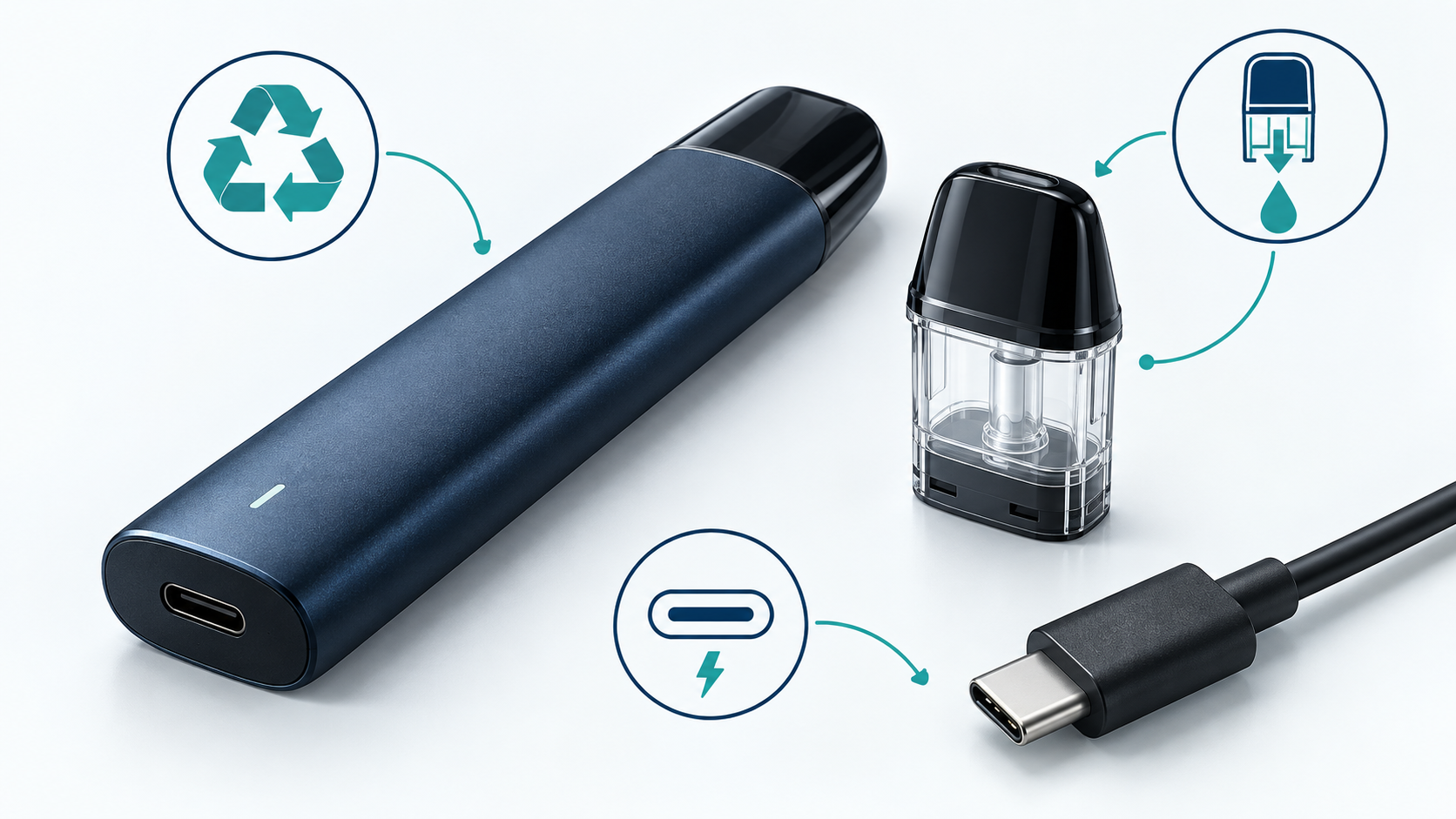
Searches for terms such as reusable vape, refillable vape and pod system often refer to different device formats. These labels describe how a device is maintained; they are not a claim about health effects, suitability or legal status.
- Reusable rechargeable device: a device designed to be charged again and used with compatible replaceable components.
- Refillable device: a device with a refillable chamber, pod or tank intended for compatible e-liquid.
- Replaceable-pod device: a rechargeable device that uses a compatible pod or cartridge system.
- Single-use device: a device that is not intended to be recharged and/or refilled. Its sale or supply may be prohibited in some destinations.
The disposable vape ban Europe search: check the country, not a headline
“Disposable vape ban Europe” is a common regulatory search phrase, but the answer varies by country. In Great Britain, the sale and supply of single-use vapes became illegal on 1 June 2025. France and Belgium have also introduced restrictions on disposable e-cigarettes. These changes show why a product format should never be assumed to be permitted across every European destination. Laws and enforcement guidance can change, so verify the current official information for the precise country involved.
What responsible product information looks like
For products legally available to adults, clear information matters more than marketing language. Look for nicotine-strength information where applicable, ingredient details, mandatory warnings, manufacturer or importer details, compatible-component information and instructions for use. Under the EU framework, labels and leaflets are intended to provide product information and risk warnings. Avoid products with unclear labels, damaged packaging or claims that guarantee safety or health benefits.

Storage, batteries and responsible disposal
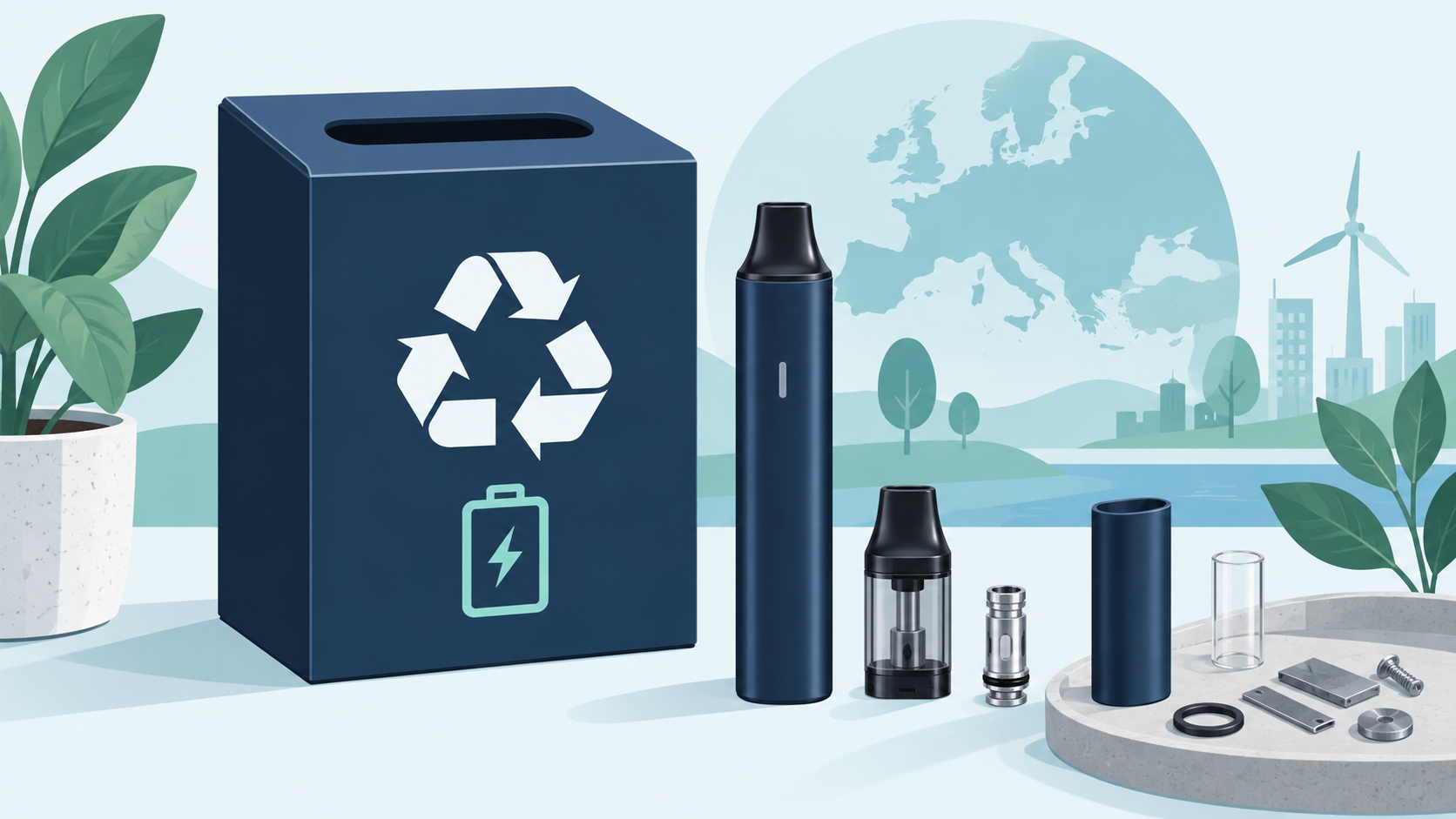
Keep e-liquids and devices away from children and pets, and store them according to the manufacturer’s instructions. Do not use damaged batteries, cables or containers. Electronic devices and batteries must not be treated as ordinary household waste. Follow local collection or retailer take-back arrangements for electrical items and battery-containing components.
Travelling within Europe: a practical adult checklist
- Confirm whether the relevant format is legal in the destination country.
- Review airline and transport rules separately from product-sale rules.
- Carry products only in original, clearly labelled packaging where lawful.
- Check local age restrictions and public-use restrictions.
- Use official government or regulator guidance for country-specific decisions.

Key takeaway
For adults researching European vaping rules in 2026, the most reliable approach is to understand the format terms, read product information carefully and verify local rules for the destination country. Regulations are evolving, particularly around single-use formats, and responsible use begins with legal-age access, accurate information and secure handling.